
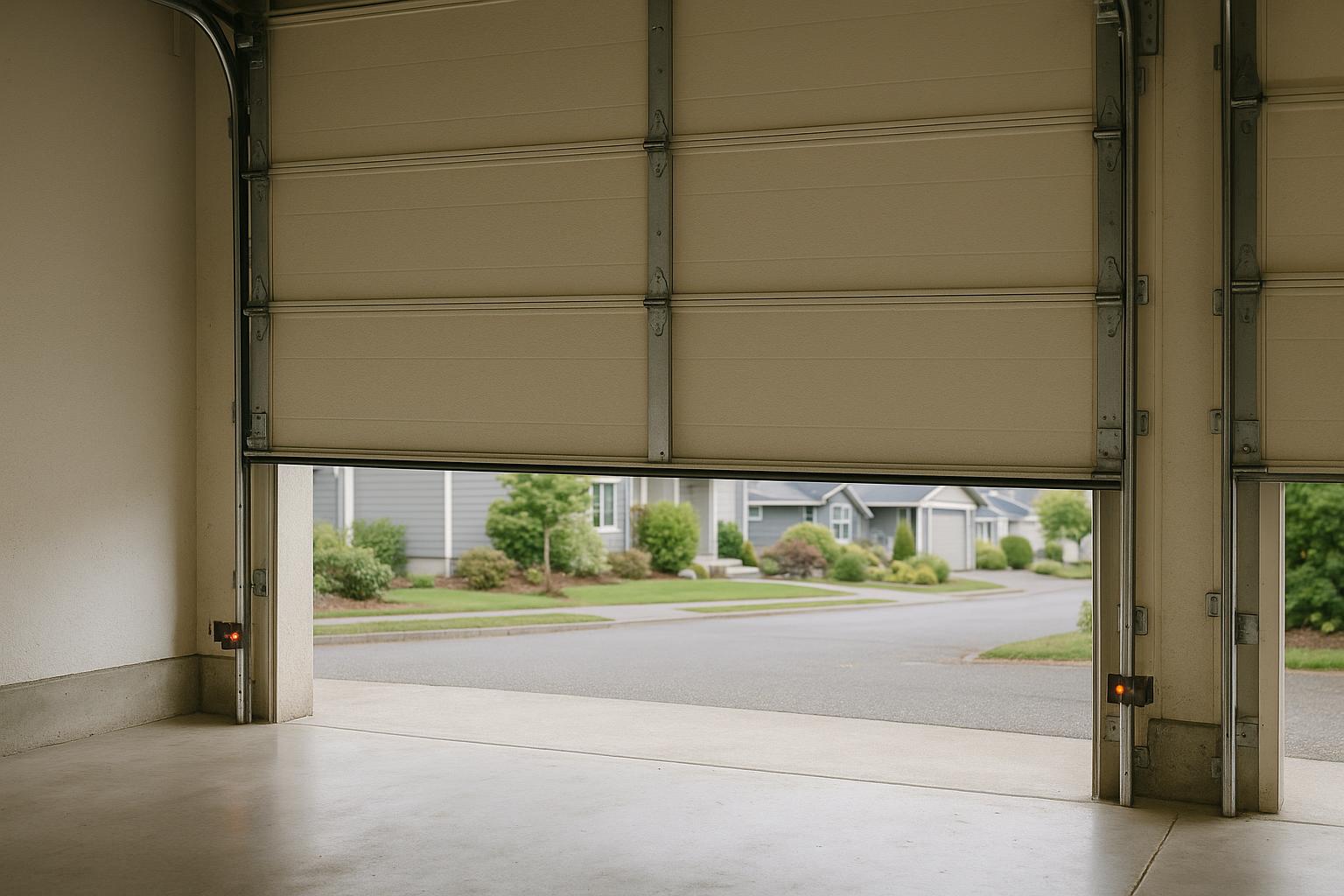
That Frustrating Garage Door Reversal Problem
You press the button on your garage door remote. The door starts coming down, and then — just before it reaches the floor — it stops and goes right back up. You try again. Same thing. Maybe it works on the third try, maybe it doesn't. Either way, you're standing in your driveway in the Marysville rain wondering what's going on.
This is one of the most common garage door complaints we hear, and the good news is that it's usually fixable without replacing the entire system. The bad news is that there are several possible causes, and diagnosing the right one matters. Let's walk through the most likely reasons your garage door reverses before closing all the way and what you can do about each one.
The Safety Sensors Are Misaligned or Blocked
This is the number one cause of a garage door that reverses before touching the ground, and it's where we always start our inspection.
Every garage door opener manufactured after 1993 is required to have photo-eye safety sensors mounted near the bottom of the door tracks on both sides. These sensors send an invisible beam across the opening. If anything breaks that beam — a trash can, a bike, a leaf, or even a spiderweb — the opener interprets it as an obstruction and reverses the door to prevent injury or damage.
Here's what to check:
- Look for obstructions. Make sure nothing is sitting in the path of the sensors. Even something small can trigger the reversal.
- Check the sensor lights. Most sensors have small LED lights. If one is blinking or off entirely, the sensors are likely misaligned.
- Clean the lenses. Dust, dirt, and cobwebs accumulate on sensor lenses, especially during the wetter months here in Marysville. A soft cloth can make a big difference.
- Check alignment. If a sensor has been bumped — maybe by a lawnmower or a kid's bicycle — it may no longer be pointing directly at its partner across the door opening. Gently adjust it until both lights are solid.
If you've tried all of this and the problem persists, the sensor wiring may be damaged or the sensors themselves may need replacement. That's when it's time to call a professional.
The Close-Limit Switch Needs Adjustment
Your garage door opener has settings called limit switches that tell it how far the door should travel when opening and closing. If the close-limit switch is set incorrectly, the opener may think the door has hit something when it reaches the floor, triggering the auto-reverse safety feature.
This is especially common after a new opener installation or if someone has recently adjusted the opener settings. On most openers, you'll find small adjustment screws or dials on the back or side of the motor unit. Turning the close-limit adjustment slightly can solve the problem, but it's important to make small changes and test after each one.
A word of caution: Setting the limit too far in the other direction can cause the opener to push the door too hard against the floor, which puts stress on the door, the tracks, and the opener motor. If you're not confident making this adjustment, we're happy to handle it during a service call.
The Tracks Are Dirty, Bent, or Misaligned
Garage door tracks guide the door smoothly up and down. When tracks become dirty, corroded, or bent, they create resistance. If the opener encounters too much resistance while closing, it may interpret that as an obstruction and reverse the door.
Visually inspect both tracks from top to bottom. Look for:
- Visible dents or bends in the metal
- Buildup of dirt, grease, or debris
- Gaps between the track and the wall or ceiling mounts
You can clean tracks with a damp cloth and a mild household cleaner. However, if the tracks are bent or have shifted out of alignment, this is a repair best left to a technician. Forcing a door through damaged tracks can lead to much bigger — and more expensive — problems down the road.
The Opener Force Settings Are Too Low
In addition to limit switches, most garage door openers have force settings that control how much power the motor uses to open and close the door. If the closing force is set too low, the opener may not have enough power to push the door all the way down, especially if the door is heavier due to insulation or if the springs are starting to wear out.
Like the limit switch adjustment, force settings can usually be changed with a small screwdriver on the opener unit. Increase the closing force slightly, test the door, and repeat if needed. But be careful — setting the force too high can be a safety hazard because the door won't reverse properly if it actually does hit something.
Worn or Broken Springs Are Creating Imbalance
Your garage door springs do the heavy lifting — literally. They counterbalance the weight of the door so the opener only has to provide a small amount of force to move it. When springs wear out or lose tension, the door becomes heavier for the opener to manage. This added resistance can trigger the auto-reverse feature.
You can test your door's balance by disconnecting the opener (pull the red emergency release cord) and manually lifting the door halfway. If it stays in place, the springs are balanced. If it falls or rises on its own, the springs need attention.
Important safety note: Garage door springs are under extreme tension and can cause serious injury if handled improperly. Spring replacement is not a DIY job. If you suspect your springs are the issue, please call a professional. Our team at Marysville Garage Door Pro handles spring replacements regularly and can usually complete the job the same day.
Weather and Temperature Changes
Here in the Pacific Northwest, we deal with temperature swings and moisture that many other parts of the country don't. Cold weather can cause metal tracks to contract slightly and lubricant to thicken, both of which increase resistance on the door. Moisture can also cause corrosion on tracks, rollers, and hinges over time.
Regular maintenance — including lubrication of moving parts and inspection of hardware — goes a long way toward preventing weather-related issues. We recommend having your garage door serviced at least once a year, ideally before the colder months set in.
When to Call a Professional
Some of the fixes above are straightforward enough for a handy homeowner to tackle. But if you've cleaned the sensors, checked the tracks, and adjusted the settings without success, there's likely a deeper issue at play. Wiring problems, worn gears inside the opener, or spring issues all require professional tools and experience.
At Marysville Garage Door Pro, we diagnose the actual problem before recommending any repair. We serve homeowners throughout Marysville, Arlington, Lake Stevens, Everett, and surrounding communities with straightforward service and fair pricing. If your garage door is reversing and you can't figure out why, give us a call. We'll get it sorted out so you can get back to your day.