
You Need to Leave, But Your Garage Door Won't Cooperate
It's a Monday morning in Marysville. The power went out overnight, your garage door opener is useless, and your car is trapped inside. Or maybe the opener just stopped working and you need to get to work. Either way, you're standing in your garage pulling on a door that won't move, and you're not sure what to do next.
Every garage door with an automatic opener has a manual release that lets you operate the door by hand. But if you've never used it — or if something else is wrong — it can feel like the door is cemented in place. Let's walk through how to manually open your garage door safely, what might be preventing it from moving, and when it's time to call in a professional.
How the Manual Release Works
Your garage door opener is connected to the door by a trolley that rides along a rail. When everything is working normally, the opener moves the trolley, which moves the door. But there's a bypass built into every system: the emergency release cord.
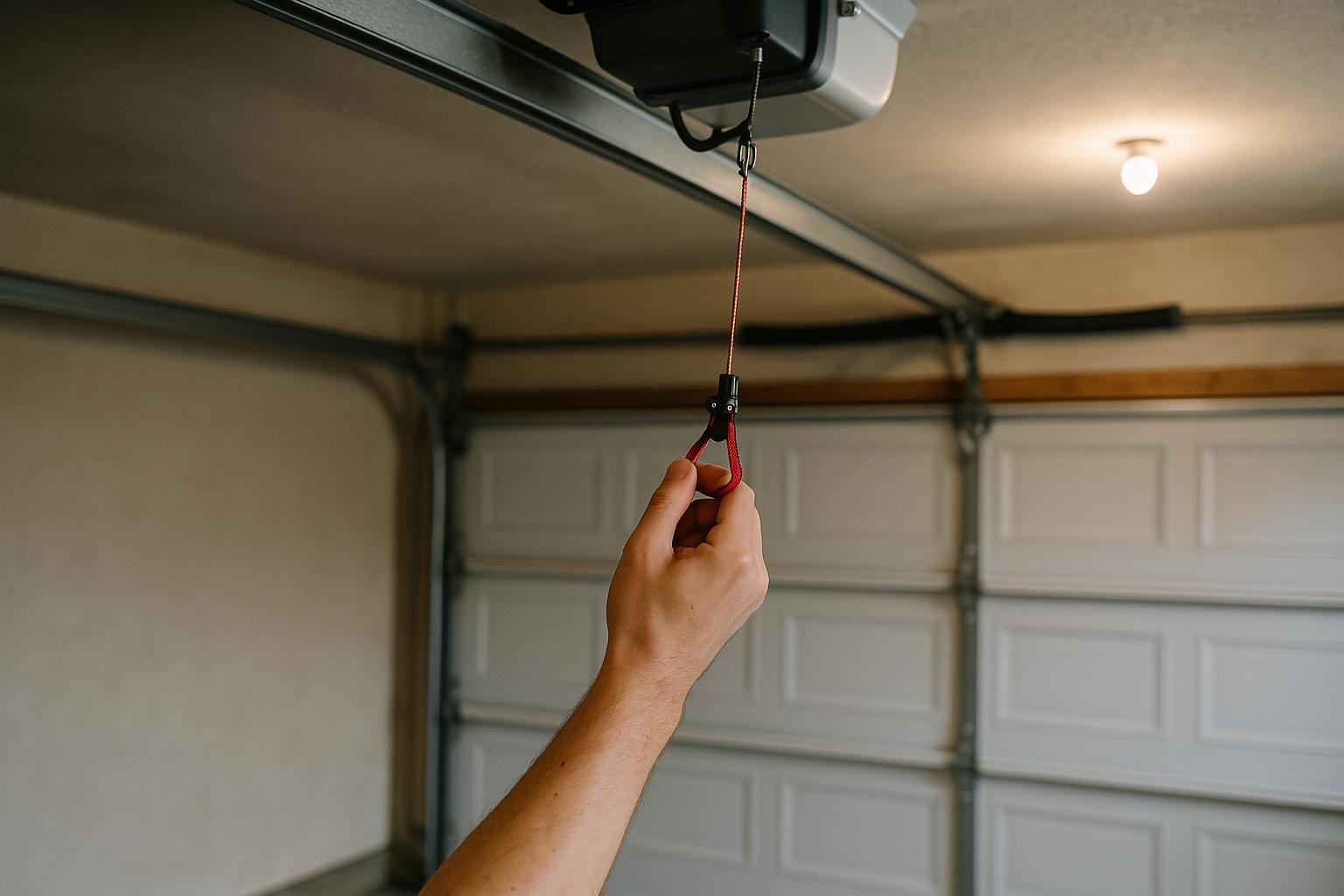
You've probably noticed it — a red handle hanging from a short rope near the top of your garage door track. That cord disengages the trolley from the opener's drive mechanism, allowing you to slide the door up and down by hand.
Steps to Manually Open Your Garage Door
- Make sure the door is fully closed. Never pull the emergency release when the door is partially open, especially if you suspect a broken spring. The door could come crashing down under its own weight.
- Pull the red emergency release handle. Pull it straight down and toward the motor unit. You should hear or feel a click as the trolley disengages.
- Lift the door. Grip the door at the bottom with both hands and lift straight up. A properly balanced garage door should feel relatively light — around 10 to 15 pounds of effort — even though the door itself may weigh 150 pounds or more. The springs do the heavy lifting.
- Secure the door in the open position. If you need to drive out, make sure the door stays up on its own. A balanced door should hold its position when you let go. If it starts sliding down, something is wrong with the spring system, and you should not leave the door unattended in the open position.
What If the Door Won't Move at All?
If you've pulled the release cord and the door still won't budge, don't force it. There are several reasons a garage door refuses to open manually, and some of them can be dangerous to troubleshoot on your own.
Broken Springs
This is the most common reason a garage door feels impossibly heavy when you try to lift it by hand. The torsion or extension springs counterbalance the weight of the door. When one breaks, you're essentially trying to deadlift a 150- to 250-pound slab of steel or wood. If you hear a loud bang from the garage recently, that was likely a spring snapping. Do not attempt to open the door — call a garage door technician.
The Door Is Locked
Some garage doors have a manual lock — a handle or latch on the inside that slides bolts into the track. If someone engaged the lock, the door won't move regardless of whether the opener is connected. Check both sides of the door for a locking mechanism and disengage it before trying again.
Something Is Blocking the Tracks
Debris, a shifted track, or a roller that's popped out of the track can all jam the door in place. Look along both tracks from top to bottom for anything that seems out of place. Bent tracks are especially common in older Marysville homes where the garage has settled slightly over the years.
The Trolley Didn't Fully Disengage
Sometimes the emergency release doesn't fully disconnect the trolley, especially if the cord hasn't been used in years. Try pulling the handle again with a firm, steady motion. If the mechanism is rusted or stuck, a small amount of silicone-based lubricant on the trolley carriage can help free it up.
Reconnecting the Opener After Power Returns
Once the power is back or your opener is repaired, you'll need to re-engage the trolley so the opener can operate the door again. Here's how:
- Close the door fully by hand.
- Pull the emergency release handle toward the door (the opposite direction from when you disengaged it). On most models, this resets the trolley to reconnect automatically.
- Press your wall button or remote. The opener will run, the trolley will catch, and normal operation resumes.
If the trolley won't re-engage, try manually sliding it along the rail until it clicks back into the carriage. Your opener's manual will have model-specific instructions if you get stuck.
Safety Tips to Keep in Mind
- Never try to manually open a door with a broken spring. The door is dangerously heavy without spring tension, and attempting to prop it open can result in serious injury.
- Keep the area around the emergency release clear. You should be able to reach the red handle easily at all times.
- Don't leave a manually opened door unattended unless you're confident it stays in place on its own. An unbalanced door can slide shut without warning.
- Teach everyone in your household how to use the manual release. In an emergency — a fire, a power outage, a medical situation — knowing how to get the garage door open quickly matters.
When to Call a Professional
If your garage door won't open manually and you've ruled out a lock or obvious obstruction, there's likely a mechanical issue that needs professional attention. Broken springs, damaged cables, bent tracks, and seized rollers are all repairs that require the right tools and experience to fix safely.
At Marysville Garage Door Pro, we handle these calls regularly — especially during winter storms when power outages leave homeowners stranded. We serve Marysville, Arlington, Lake Stevens, Everett, and surrounding areas with fast, honest service. If your garage door has you stuck, give us a call and we'll get it sorted out.
A Little Preparation Goes a Long Way
The best time to learn how to use your garage door's manual release is before you actually need it. Take two minutes this weekend to locate the red handle, practice pulling it, and make sure the door moves smoothly by hand. If it feels heavy, sticks, or won't stay open, that's a sign something needs attention — and it's much better to discover that on a calm Saturday afternoon than during a power outage at 6 a.m. on a workday.