
Your Garage Door Springs Are Doing More Work Than You Think
Most homeowners in Marysville don't think about their garage door springs until something goes wrong. And when something does go wrong, it's usually dramatic — a loud bang from the garage, a door that suddenly feels impossibly heavy, or a opener that strains and groans without lifting the door more than a few inches.
Your garage door springs are the real workhorses of the entire system. They counterbalance the weight of the door — which can be anywhere from 130 to over 400 pounds depending on the material and size — so that your opener (and your arms, if you're operating it manually) don't have to do all the heavy lifting. When those springs start to wear out or break, everything else suffers.
At Marysville Garage Door Pro, spring replacement is one of the most common service calls we get. Here's how to recognize the signs that your springs are on their way out, what causes them to fail, and why this is one repair you should never attempt on your own.
How Long Do Garage Door Springs Last?
Most standard torsion springs are rated for approximately 10,000 cycles. One cycle equals one full open and one full close. If you use your garage door twice a day — once to leave and once to come home — that's roughly 730 cycles per year, giving your springs a lifespan of about 12 to 14 years.
But many households in Marysville use their garage door far more than twice a day. If multiple family members come and go, if kids are opening the door to grab bikes or sports equipment, or if you use the garage as your primary entry point, you could be racking up four to six cycles a day or more. That cuts the lifespan of your springs down to seven years or less.
High-cycle springs rated for 25,000 or even 50,000 cycles are available and worth considering if you want a longer-lasting setup. We install these regularly for customers who want to reduce the frequency of future repairs.
Warning Signs Your Springs Are Wearing Out
Springs rarely fail without giving you some advance notice. Here are the most common signs that replacement is coming:
The Door Feels Heavier Than Usual
Try this simple test: disconnect your garage door opener by pulling the emergency release handle, then manually lift the door about halfway. A properly balanced door with healthy springs should stay in place on its own. If it feels unusually heavy, slides back down, or requires significant effort to lift, your springs are losing tension.
The Door Opens Unevenly or Crooked
If your garage door has two extension springs (one on each side) and one is weaker than the other, the door may rise unevenly. You might notice one side lifting faster or the door looking slightly crooked as it moves along the tracks. This puts extra stress on the tracks, rollers, and opener, and it can lead to bigger problems if left unaddressed.
You Hear Loud Squeaking or Grinding
Some noise during operation is normal, but loud squeaking, popping, or grinding sounds can indicate that your springs are corroded, dry, or deformed. Rust is particularly common here in the Pacific Northwest, where our damp climate accelerates corrosion on metal components.
Visible Gaps in the Spring Coils
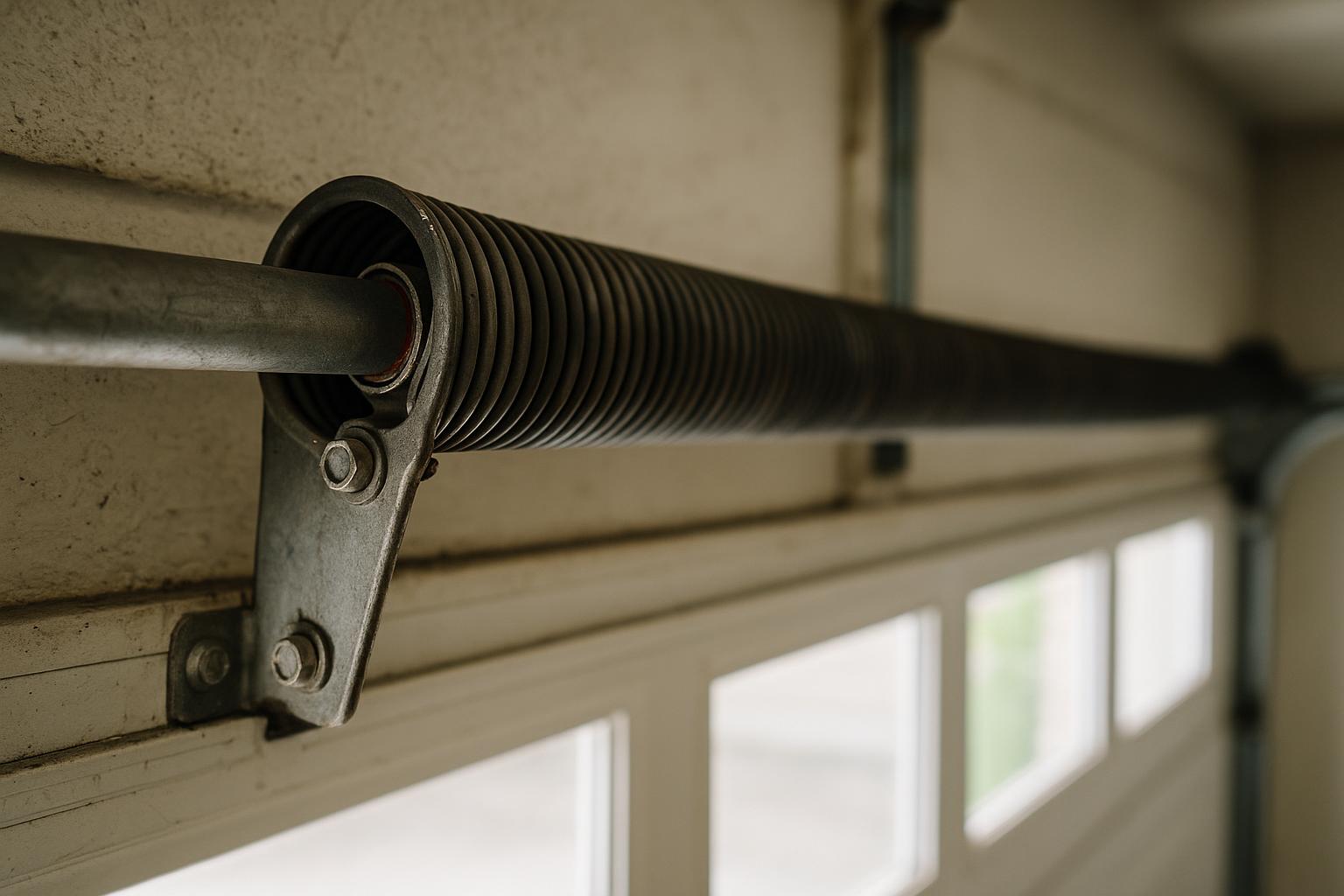
Take a look at your torsion spring — it's the tightly wound coil mounted on a metal shaft above the inside of your garage door. If you see a visible gap or separation in the coils, the spring has already broken. Even a small gap means the spring is no longer providing proper counterbalance.
The Opener Struggles or Stops Mid-Cycle
Your garage door opener is designed to move a balanced door, not to lift the full weight on its own. If your springs are failing, the opener has to work much harder. You may notice it straining, moving the door more slowly, or stopping partway through the cycle. Continuing to use the opener in this state can burn out the motor prematurely.
A Loud Bang From the Garage
If you hear a sudden, loud bang — almost like a gunshot — coming from your garage when no one is in there, it's very likely a spring that just snapped. The release of tension creates a startling amount of noise. If this happens, do not try to operate the door. Call a professional.
Why DIY Spring Replacement Is Dangerous
We understand the appeal of handling home repairs yourself. Many of our customers in Marysville and the surrounding areas of Arlington, Lake Stevens, and Everett are handy, capable people. But garage door spring replacement is one job we strongly recommend leaving to trained technicians.
Here's why: torsion springs are under an enormous amount of tension. A standard residential torsion spring can store enough energy to cause serious injury or even death if it's improperly handled, wound, or released. Professional technicians use specialized tools — including winding bars, clamps, and safety equipment — and follow precise procedures to replace springs safely.
Every year, emergency rooms across the country treat thousands of injuries related to garage door spring accidents. It's simply not worth the risk when professional replacement is affordable and can typically be completed in under an hour.
What to Expect During a Professional Spring Replacement
When you call Marysville Garage Door Pro for a spring replacement, here's what the process looks like:
- Inspection: We examine the entire door system — not just the springs. We check the cables, drums, rollers, tracks, and opener to make sure nothing else was damaged or is showing signs of wear.
- Spring selection: We match the replacement springs to your specific door based on its weight, height, and track configuration. Using the wrong spring size is a common mistake that leads to poor performance and premature failure.
- Replacement: We safely unwind the old springs, remove them, install the new ones, and wind them to the correct tension.
- Balancing and testing: After installation, we balance the door and test it through several full cycles to make sure everything operates smoothly and safely.
- Lubrication and adjustments: We lubricate all moving parts and make any necessary adjustments to the opener's force and travel settings.
The whole process usually takes 45 minutes to an hour, and we clean up after ourselves before we leave.
Should You Replace One Spring or Both?
If one spring breaks and the other is still intact, you might wonder whether it makes sense to replace just the broken one. Our recommendation is almost always to replace both springs at the same time. Here's the reasoning: if one spring has reached the end of its lifespan, the other one is likely not far behind. Replacing both at once saves you from paying for a second service call in a few months and ensures that your door stays evenly balanced.
Keep Your Garage Door Safe and Reliable
Your garage door is the largest moving component of your home and one of the most frequently used. Keeping the springs in good condition isn't just a convenience issue — it's a safety issue. A door with failing springs can drop unexpectedly, and an opener working overtime to compensate for bad springs can fail at the worst possible time.
If you've noticed any of the warning signs we've described, or if your springs are more than eight to ten years old, it's worth having them inspected. At Marysville Garage Door Pro, we provide honest assessments and fair pricing — and we'll never recommend a repair you don't actually need.
Give us a call or schedule a service appointment online. We're here to help homeowners throughout Marysville and the surrounding communities keep their garage doors working safely and reliably, year after year.