
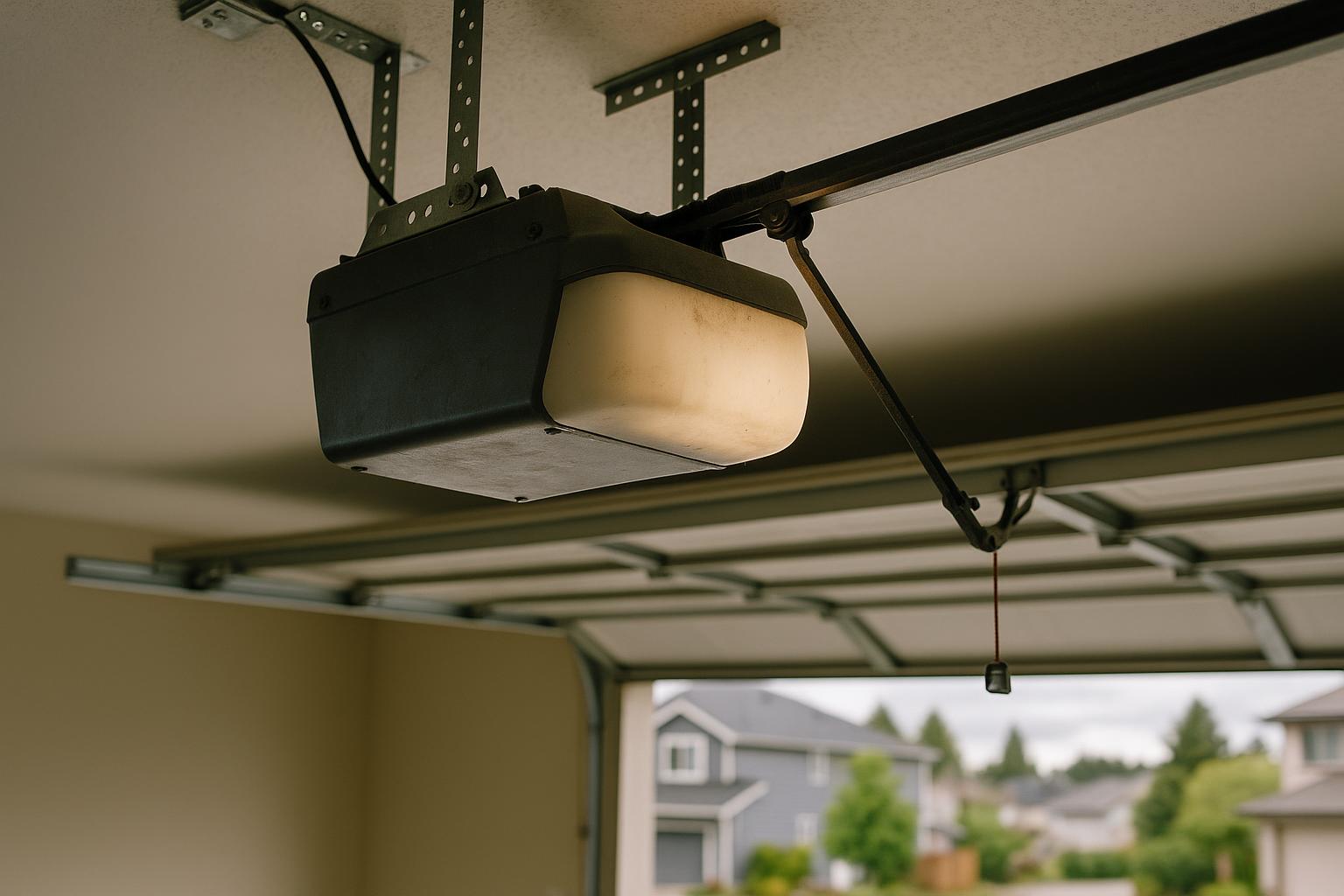
Your Garage Door Opener Has an Expiration Date
You press the button, the door goes up. You press it again, the door comes down. It's one of those things you never think about — until the day it stops working. For most homeowners in Marysville, the garage door opener is one of the hardest-working appliances in the house. If your family comes and goes a few times a day, that opener could cycle over 1,500 times a year. So how long can you realistically expect it to last?
The short answer is 10 to 15 years for most residential garage door openers. But the real answer depends on a handful of factors — some you can control, and some you can't. Let's break it down so you know what to watch for and when it's time to start thinking about a replacement.
What Determines How Long Your Opener Lasts
Not all garage door openers are built the same, and not all of them are treated the same. Here are the biggest factors that affect lifespan:
Build Quality and Drive Type
Garage door openers come in three main drive types: chain drive, belt drive, and screw drive. Chain drive openers are the most common and tend to be durable workhorses, but they're also the noisiest. Belt drive models run quieter and often last just as long with proper care. Screw drive openers have fewer moving parts, which sounds like a plus, but they can be more sensitive to temperature swings — something worth considering in the Pacific Northwest where Marysville winters bring cold, damp conditions.
Higher-quality units from reputable manufacturers generally last longer. A bargain opener might save you money upfront but could give out years earlier than a mid-range or premium model.
Frequency of Use
This one is straightforward. The more you use your opener, the faster it wears out. A household where the garage door is the primary entry point — opened and closed four or more times a day — will put significantly more stress on the motor and gears than a home where the garage is used once or twice a day.
Maintenance (or Lack of It)
Garage door openers don't need a lot of maintenance, but they do need some. Lubricating the chain or screw, tightening hardware, and making sure the door itself is properly balanced all reduce the strain on your opener. When the door is out of balance or the springs are wearing out, the opener has to work harder every single cycle. That extra strain adds up over time and can shorten the motor's life by years.
Climate and Environment
Marysville's climate is relatively mild compared to other parts of the country, but the moisture and occasional freezing temperatures still take a toll. Humidity can cause corrosion on metal components, and cold weather thickens lubricant and makes the motor work harder. If your garage isn't insulated or if moisture tends to build up inside, your opener may age faster than average.
Signs Your Garage Door Opener Is on Its Way Out
Garage door openers rarely fail without warning. Here are some common signs that yours is nearing the end of its useful life:
- Intermittent operation: The opener works sometimes but not others, even after you've replaced the remote batteries.
- Excessive noise: Grinding, straining, or rattling sounds that are new or getting worse can indicate worn gears or a struggling motor.
- Slow response: A noticeable delay between pressing the button and the door starting to move.
- Vibration: The opener unit shakes or vibrates more than it used to during operation.
- Frequent need for resets: If you're constantly having to unplug and reset the unit, something internal is failing.
- The door reverses or stops mid-cycle: While this can sometimes be a sensor issue, it can also point to a motor that can no longer handle the load.
If your opener is more than 10 years old and showing any of these symptoms, repair may not be the most cost-effective option.
Repair vs. Replace: How to Decide
Not every problem means you need a brand-new opener. A stripped gear, a faulty circuit board, or a worn-out capacitor can often be repaired for a fraction of the cost of replacement. Here's a general rule of thumb we share with our customers:
- If the opener is under 8 years old and the repair is straightforward, fixing it usually makes sense.
- If the opener is 10-15 years old and the repair cost is more than half the price of a new unit, replacement is usually the smarter investment.
- If the opener is over 15 years old, we almost always recommend replacing it — not just because of reliability, but because of the safety and technology improvements in newer models.
Why Newer Openers Are Worth Considering
Garage door opener technology has come a long way in the last decade. If your current unit is from the early 2010s or older, here's what you're missing:
- Battery backup: Many modern openers include a battery backup so you can still open your garage during a power outage — a real advantage during Marysville's winter storms.
- Smartphone connectivity: Wi-Fi-enabled openers let you monitor, open, and close your garage door from anywhere using your phone. You'll never have to wonder if you left the garage open again.
- Quieter motors: DC motors with soft start and stop technology are dramatically quieter than the AC motors found in older units, which matters if anyone in your home sleeps near the garage.
- Enhanced safety features: Newer models have improved auto-reverse sensitivity and rolling code technology that makes it much harder for someone to intercept your remote signal.
- Better energy efficiency: Modern openers use LED lighting and standby modes that consume far less electricity than older units.
Getting the Most Life Out of Your Current Opener
If your opener is still in good shape and you want to keep it running as long as possible, here are a few things you can do:
- Schedule annual maintenance. Having a professional inspect your garage door system once a year catches small problems before they become big ones. This includes checking the balance of the door, which directly affects how hard your opener has to work.
- Keep the tracks and hardware clean. Dirt, debris, and rust create friction that forces the opener to strain.
- Replace worn springs promptly. When springs weaken, the full weight of the door shifts to the opener. This is one of the fastest ways to burn out a motor.
- Don't ignore strange sounds. New noises are your opener's way of telling you something has changed. Addressing it early can add years to the unit's life.
When You're Ready, We're Here
Whether your garage door opener just needs a tune-up or it's time for a full replacement, the team at Marysville Garage Door Pro can help you figure out the right move. We'll take a look at your current setup, give you an honest assessment, and walk you through your options — no pressure, no upselling. If a repair makes sense, we'll tell you. If replacement is the better call, we'll explain why and help you choose a unit that fits your home and budget.
If you're in Marysville, Arlington, Lake Stevens, or the surrounding area and your opener is acting up, give us a call. We'll get it sorted out.